
India's Revised GDP Growth: Controversy and Implications
Discover the implications of India‘s revised GDP growth amid ongoing debates. Is the economy truly thriving? Read more to find out

Key Takeaways
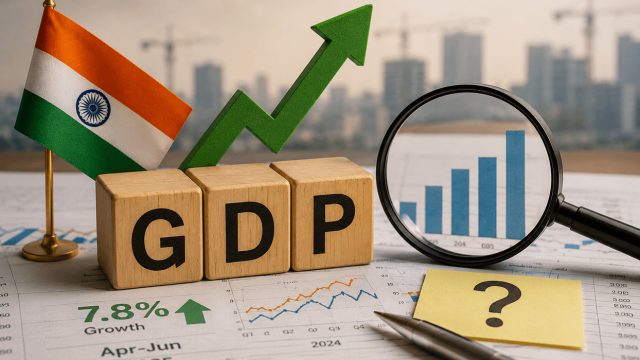
- India's GDP grew by 7.8% year-on-year in April-June 2023.
- Former finance secretary Subhash Chandra Garg questions the accuracy of revised data.
- Changes to past figures may artificially inflate current growth rates.
- The new economic output framework was introduced in February 2023.
- Critics warn of potential economic transparency issues.
The Controversy Surrounding India's GDP Figures
India's economy recently reported a significant 7.8% growth in GDP for the April-June quarter of 2023, a figure that exceeded analysts' expectations. However, this announcement has sparked a contentious debate regarding the reliability of these statistics. Former finance secretary Subhash Chandra Garg has publicly criticized the alterations made to previous data, suggesting that these revisions have resulted in a misleadingly high growth rate.
The Impact of Data Revisions
At the center of this controversy is a new framework that was introduced in February, aimed at improving the accuracy of economic output measurements. Critics argue that this framework has not only changed the methodology but has also adjusted historical data in such a way that it creates a weaker comparison base for current reports. According to Garg, the nominal GDP for the same period in the previous year was reduced significantly, leading to an artificially inflated growth figure for the current quarter.
Economic Growth vs. Misleading Statistics
While the Indian government is eager to showcase a robust economy amid global uncertainties, the validity of these growth figures is now in jeopardy. By presenting an inflated growth percentage, stakeholders are left questioning the true state of the Indian economy. For many, this situation raises alarms about the long-term effects of relying on potentially manipulated data.
Analyzing Economic Trends in Southeast Asia
In a broader context, India's situation reflects challenges faced across Southeast Asia, particularly in nations like Indonesia. The region is seeing a considerable shift in economic dynamics, and transparency in data reporting is more critical than ever. Revived interest in accurate economic indicators could drive better policymaking, benefiting countries like Indonesia, where reliable data is paramount for attracting investments.
Lessons for Other ASEAN Economies
The controversy surrounding India's GDP numbers highlights a crucial lesson for other ASEAN economies. As nations in Southeast Asia, including Indonesia, Jakarta, Surabaya, and Bali, continue to develop, ensuring accurate economic reporting will be essential in maintaining investor confidence and fostering sustainable growth.
Conclusion
The ongoing discourse regarding India's GDP growth figure is more than a domestic issue; it reflects significant implications for economic transparency and accountability that resonate across the region. As countries in Southeast Asia mirror India's experiences, the need for honest representation of economic data has never been more vital. Policymakers and stakeholders in the Indo-Pacific region must prioritize trustworthy statistics to guide their economic strategies and foster long-term growth.